
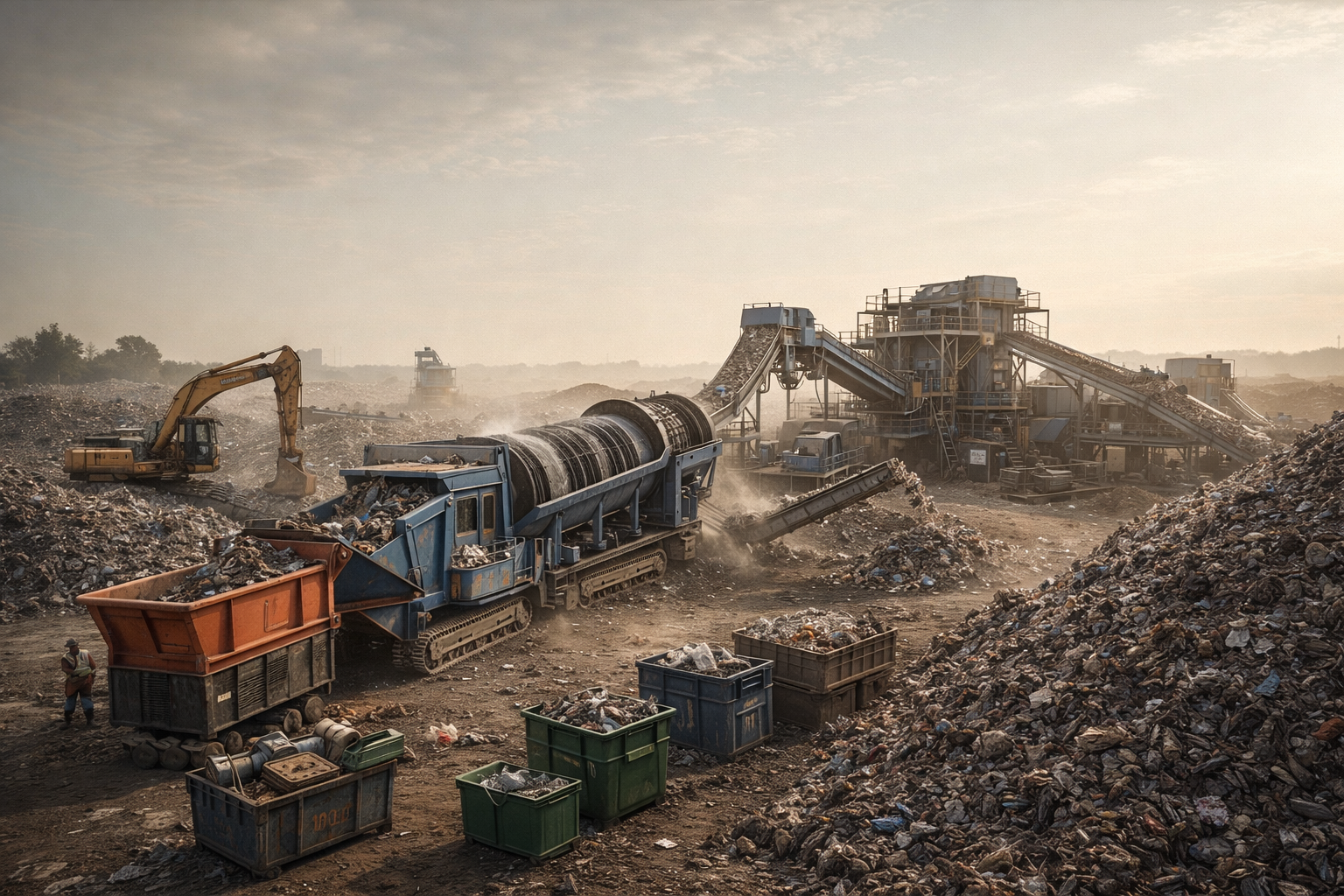
India is entering a new era of environmental accountability. With landfills overflowing and cities struggling to manage growing waste volumes, the government has proposed stronger, technology-backed reforms under the Solid Waste Management (SWM) Rules 2026.
Recent coverage by Down To Earth, Indian Express, Vajiram & Ravi, and The Better India highlights that the new framework emphasizes segregation at source, digital compliance, accountability, and scientific processing.
For industries, municipalities, and waste technology providers, these rules are not just regulatory updates; they represent a structural shift toward sustainable, resource-efficient waste management.
1. Why India Needed New Waste Rules
India generates over 1.5 lakh tonnes of municipal waste daily, yet a significant portion still ends up untreated in landfills. Mixed waste streams, poor segregation, and limited processing infrastructure have made recovery difficult.
The new rules aim to:
- Reduce landfill dependency
- Increase recycling and composting
- Improve traceability of waste flows
- Hold bulk generators accountable
Simply put, the focus has shifted from “collect and dump” to “segregate, process, and recover.”
2. Mandatory Segregation: The Foundation of the New System
One of the most impactful changes is four-way segregation at the source:
| Waste Type | Examples | Treatment |
|---|---|---|
| Wet/Biodegradable | Food, garden waste | Composting/biogas |
| Dry/Recyclable | Plastic, Paper, and Metal | Recycling |
| Domestic hazardous | Sanitary, batteries | Special handling |
| Sanitary/Rejects | Diapers, contaminated waste | Incineration/landfill |
Segregation will now be mandatory, not optional. Households, commercial establishments, and bulk generators must comply.
What this means for businesses:
- Separate bins are required.
- On-site processing encouraged
- Penalties for mixed waste
This directly increases demand for shredders, composters, incinerators, MRFs, and RDF/AFR solutions.
3. Digital Tracking & Accountability
A major reform is the move toward digital monitoring systems. Municipal bodies and operators are expected to:
- Track waste movement digitally
- Record collection and disposal
- Monitor processing plants
- Ensure traceable disposal routes
This technology-first approach reduces illegal dumping and improves operational transparency.
For waste solution providers, this opens opportunities for:
- Smart monitoring systems
- Integrated plant automation
- Data-driven waste logistics
4. Penalties and Responsibility for Bulk Generators
The rules clearly state that bulk waste generators, such as:
- Hotels
- Housing
- societies
- Institutions
- Commercial complexes
- Industries
must manage their own waste or ensure scientific disposal.
Non-compliance may lead to:
- Fines
- Refusal of municipal collection
- Legal action
This effectively shifts responsibility from municipalities to generators.
Practical implication:
- Many facilities will need:
- On-site composting
- Shredding units
- Small incinerators
- Material recovery systems
This is where engineered waste treatment technologies become critical.
5. Opportunities for the Waste Management Industry
While stricter laws may appear challenging, they create strong growth opportunities.
Demand will increase for:
- RDF/AFR processing lines
- Biomining of legacy waste
- Composting plants
- Incineration systems
- MRFs and segregation lines
Companies providing turnkey engineering, installation, and operations support will be best positioned to benefit.
Forward-thinking industries can transform compliance into cost savings and energy recovery.
Key Takeaways
- Segregation is compulsory.
- Digital tracking improves enforcement.
- Bulk generators must self-manage.
- Scientific processing replaces dumping.
- Waste tech demand will surge.
India’s SWM Rules 2026 represent a decisive shift toward structured, accountable waste management. For businesses, this is not merely a regulatory change; it’s a call to modernize infrastructure and adopt sustainable technologies.
Organizations that act early will gain operational efficiency, compliance confidence, and long-term cost benefits.