
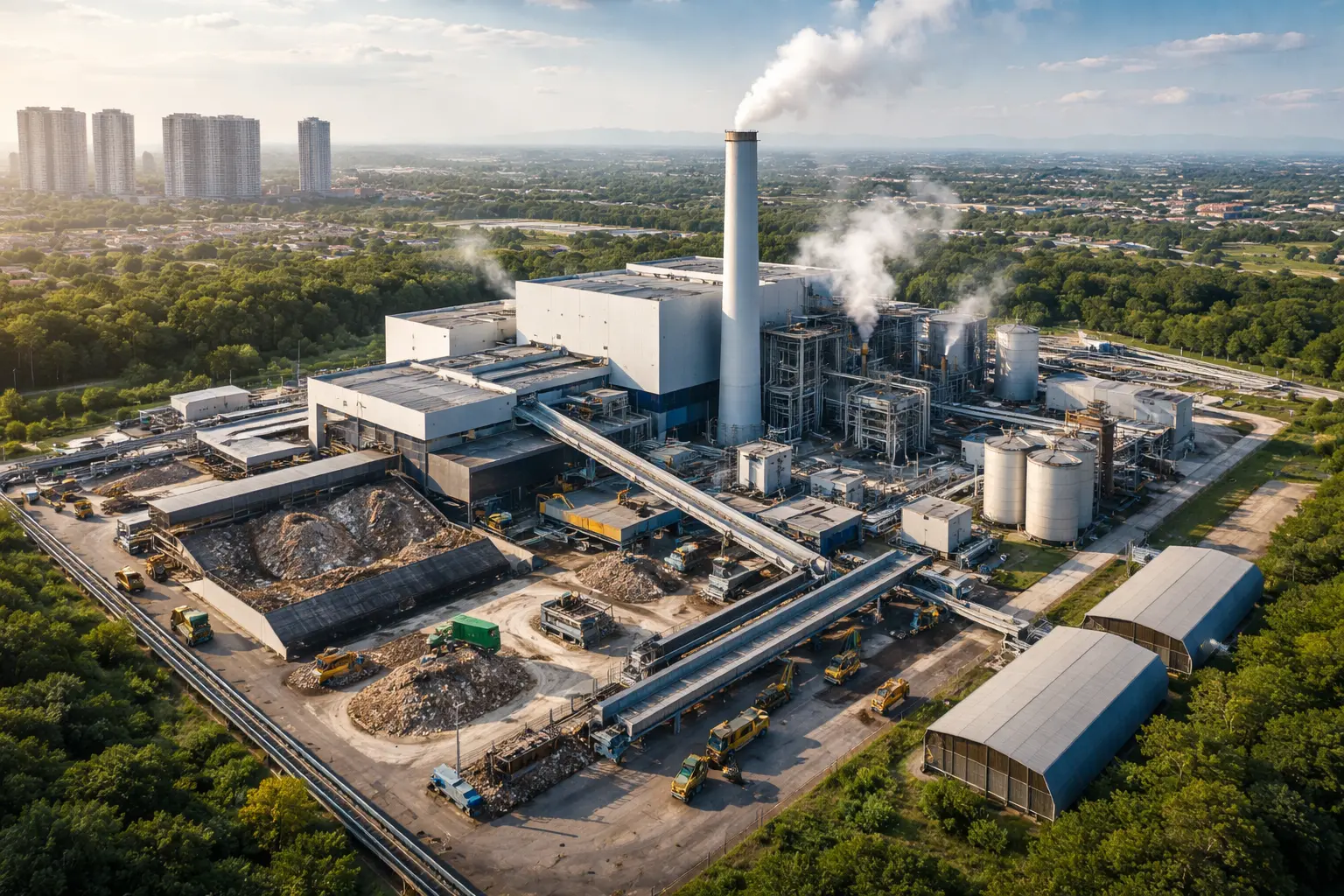
India’s rapid urbanization is generating an unprecedented amount of municipal solid waste. With cities struggling to manage overflowing landfills, governments and industries are increasingly looking toward waste-to-energy (WtE) technologies as a scalable solution.
Recent developments in northern India highlight a broader trend: state governments are actively planning large-scale waste-to-energy projects to convert municipal waste into electricity and alternative fuels. These initiatives signal a major transformation in the way India handles solid waste, shifting from landfill disposal to resource recovery and energy generation.
This shift is creating new opportunities for waste management companies, technology providers, and municipalities seeking sustainable waste treatment solutions.
Why Waste-to-Energy is Becoming Critical for India
India generates millions of tonnes of municipal solid waste every year, and the amount continues to grow due to population expansion and economic development. Traditional landfill systems are no longer sustainable.
Waste-to-energy plants address two critical challenges simultaneously:
- Reducing landfill waste
- Generating renewable energy from waste
Studies show that waste-to-energy technologies can play a major role in tackling India’s waste crisis while contributing to the country’s renewable energy targets.
Currently, India already operates multiple municipal solid waste-based power plants with a combined processing capacity of more than 12,700 tonnes per day of waste and an installed generation capacity of nearly 250 MW of electricity. Source: https://sansad.in/getFile/annex/268/AU2694_AeKCRP.pdf
These numbers are expected to grow significantly as more cities adopt modern waste processing infrastructure.
How Waste-to-Energy Technology Works
Waste-to-energy systems use advanced thermal and biological processes to convert municipal waste into usable energy.
Common technologies include:
1. RDF (Refuse-Derived Fuel) Plants
Waste is processed and converted into fuel pellets that can be used in cement kilns or power plants.
2. Incineration-Based Power Plants
Municipal waste is combusted under controlled conditions to generate steam and electricity.
3. Torrefaction
A thermochemical processing system that is widely applied in waste-to-energy, zero-landfill, and biomass fuel upgrading projects.
4. Biomethanation
Organic waste is converted into biogas that can be used as fuel or for electricity generation.
These technologies allow cities to recover value from waste while reducing environmental risks associated with open dumping.
Policy Support Driving Waste-to-Energy Growth
India’s regulatory framework strongly supports waste processing and energy recovery.
Under the Solid Waste Management Rules, recyclable materials must be recovered first, while non-recyclable waste can be processed through waste-to-energy or similar technologies.

Additionally, energy policies encourage the development of waste-based power plants by ensuring electricity generated from these facilities can be purchased by distribution companies.
This policy framework creates financial viability for waste-to-energy projects and encourages private investment.
Key Benefits of Waste-to-Energy Plants
For cities and industries, waste-to-energy offers several strategic advantages:
Landfill Reduction
WtE plants significantly decrease the volume of waste sent to landfills.
Renewable Energy Generation
Waste becomes a valuable resource for producing electricity or fuel.
Improved Urban Sanitation
Proper waste processing helps reduce environmental pollution and health risks.
Circular Economy Development
Waste-to-energy supports resource recovery and sustainable waste management systems.
The Future of Waste Management in India
India is entering a new phase in waste management, moving beyond simple waste collection toward integrated waste-processing ecosystems.
In the coming years, cities are expected to adopt a combination of:
- Waste-to-energy plants
- RDF production facilities
- Biomethanation plants
- Recycling and material recovery facilities
Together, these technologies will help transform waste into valuable resources while supporting India’s sustainability goals.
For technology providers, infrastructure developers, and environmental solution companies, the growing focus on waste-to-energy presents a major opportunity to contribute to clean energy generation and sustainable urban development.
Frequently Asked Questions (FAQs)
A waste-to-energy (WtE) plant is a facility that converts municipal solid waste into electricity, heat, or fuel using thermal or biological processes. The most common technologies include incineration, RDF (refuse-derived fuel), and torrefaction. In these systems, non-recyclable waste is processed to generate energy while reducing the amount of waste sent to landfills.
Waste-to-energy plays a critical role in addressing India’s growing waste problem. With urban areas producing millions of tonnes of municipal waste annually, WtE plants help reduce landfill dependency, generate renewable energy, and improve waste management efficiency. They also support India’s circular economy goals and clean energy targets.
Several Indian cities are investing in waste-to-energy infrastructure to manage municipal waste more sustainably. Cities such as Delhi, Hyderabad, Pune, Indore, and Gurgaon have already implemented or proposed WtE facilities. Many state governments are now exploring new projects to convert urban waste into energy while reducing landfill pressure.
Waste-to-energy plants typically process non-recyclable municipal solid waste, including plastics, packaging materials, contaminated paper, and other combustible waste. Organic waste can also be used in biomethanation systems, while certain waste streams can be converted into RDF fuel for energy generation.
Modern waste-to-energy plants are designed with advanced emission control systems to meet environmental regulations. Technologies such as scrubbers, filters, and flue gas treatment systems help minimize harmful emissions. When combined with proper waste segregation and recycling practices, WtE plants can be an environmentally responsible solution for managing residual waste.